
Creative writing is any form of writing which is written with the creativity of mind: fiction writing, poetry writing, creative nonfiction writing and more. The purpose is to express something, whether it be feelings, thoughts, or emotions.

Rather than only giving information or inciting the reader to make an action beneficial to the writer, creative writing is written to entertain or educate someone, to spread awareness about something or someone, or to express one’s thoughts.
Allegory writer creates a story in which the characters and events form a system of symbolic. Example: A form of extended metaphor in which objects.

What is the Symbol? a mark or character used as a conventional representation of an object, function, or process, e.g. the letter or letters standing for a chemical element or a character in musical notation.

A symbol is a mark, sign or word that indicates, signifies, or is understood as representing an idea, object, or relationship. Symbols allow people to go beyond what is known or seen by creating linkages between otherwise very different concepts and experiences. All communication (and data processing) is achieved through the use of symbols. Symbols take the form of words, sounds, gestures, ideas or visual images and are used to convey other ideas and beliefs. For example, a red octagon may be a symbol for “STOP”. On a map, a blue line might represent a river. Numerals are symbols for numbers. Alphabetic letters may be symbols for sounds. Personal names are symbols representing individuals. A red rose may symbolize love and compassion. The variable ‘x’, in a mathematical equation, may symbolize the position of a particle in space.
What is Irony?
Irony (from Ancient Greek εἰρωνεία eirōneía, meaning ‘dissimulation, feigned ignorance’), in its broadest sense, is a rhetorical device, literary technique, or event in which what appears, on the surface, to be the case, differs radically from what is actually the case.

Irony can be categorized into different types, including: verbal irony, dramatic irony, and situational irony. Verbal, dramatic, and situational irony are often used for emphasis in the assertion of a truth. The ironic form of simile, used in sarcasm, and some forms of litotes can emphasize one’s meaning by the deliberate use of language which states the opposite of the truth, denies the contrary of the truth, or drastically and obviously understates a factual connection. Other forms, as identified by historian Connop Thirlwall, include dialectic and practical irony.
WHAT IS IMAGERY?

Imagery
Imagery means to use figurative language to represent objects, actions, and ideas in such a way that it appeals to our physical senses.
Usually it is thought that imagery makes use of particular words that create visual representation of ideas in our minds. The word “imagery” is associated with mental pictures. However, this idea is but partially correct. Imagery, to be realistic, turns out to be more complex than just a picture. Read the following examples of imagery carefully:
- It was dark and dim in the forest.
The words “dark” and “dim” are visual images. - The children were screaming and shouting in the fields.
“Screaming” and “shouting” appeal to our sense of hearing, or auditory sense. - He whiffed the aroma of brewed coffee.
“Whiff” and “aroma” evoke our sense of smell, or olfactory sense. - The girl ran her hands on a soft satin fabric.
The idea of “soft” in this example appeals to our sense of touch, or tactile sense. - The fresh and juicy orange is very cold and sweet.
“Juicy” and “sweet” – when associated with oranges – have an effect on our sense of taste, or gustatory sense.
Imagery needs the aid of figures of speech like simile, metaphor, personification, and onomatopoeia, in order to appeal to the bodily senses. Let us analyze how famous poets and writers use imagery in literature.
Short Examples of Imagery
- The old man took the handful of dust, and sifted it through his fingers.
- The starry night sky looked so beautiful that it begged him to linger, but he reluctantly left for home.
- The fragrance of spring flowers made her joyful.
- The sound of a drum in the distance attracted him.
- The people traveled long distances to watch the sunset in the north.
- The stone fell with a splash in the lake.
- The sound of bat hitting the ball was pleasing to his ear.
- The chirping of birds heralded spring.
- There lay refuse heaps on tnd man touched the tree to learn if its skin was smooth or rough.
- When he was on the way to work, he heard the muffled cry of a woman.
- The beacons of moonlight bathed the room in ethereal light.
- The wild gusts of cold wind pierced her body.
- The burger, aromatic with spices, made his mouth water in anticipation of the first bite.
What is Narration?

NARRATION:
Humanities › English
A Guide to All Types of Narration, With Examples
Share
Flipboard
Email
storytelling graphic with hands pointing at it
tumsasedgars / Getty Images
by
Richard Nordquist
Updated January 04, 2019
In writing or speech, narration is the process of recounting a sequence of events, real or imagined. It’s also called storytelling. Aristotle’s term for narration was prothesis.
The person who recounts the events is called a narrator. Stories can have reliable or unreliable narrators. For example, if a story is being told by someone insane, lying, or deluded, such as in Edgar Allen Poe’s “The Tell-Tale Heart,” that narrator would be deemed unreliable. The account itself is called a narrative. The perspective from which a speaker or writer recounts a narrative is called a point of view. Types of point of view include first person, which uses “I” and follows the thoughts of one person or just one at a time, and third person, which can be limited to one person or can show the thoughts of all the characters, called the omniscient third person.
Uses in Types of Prose Writing
It’s used in fiction and nonfiction alike. “There are two forms: simple narrative, which recites events chronologically, as in a newspaper account;” note William Harmon and Hugh Holman in “A Handbook to Literature,” “and narrative with plot, which is less often chronological and more often arranged according to a principle determined by the nature of the plot and the type of story intended. It is conventionally said that narration deals with time, description with space.”
Cicero, however, finds three forms in “De Inventione,” as explained by Joseph Colavito in “Narratio”: “The first type focuses on ‘the case and…the reason for dispute’ (1.19.27). A second type contains ‘a digression for the purpose of attacking somebody,…making a comparison,…amusing the audience,…or for amplification’ (1.19.27). The last type of narrative serves a different end—’amusement and training’—and it can concern either events or persons (1.19.27).” (In “Encyclopedia of Rhetoric and Composed.
FORM OF DRAMA
1. COMEDY: professional entertainment consisting of jokes and satirical sketches, intended to make an audience laugh. a movie, play, or broadcast program intended to make an audience laugh. the style or genre represented by comedy films, plays, and broadcast programs.
2. HISTORY: the study of past events, particularly in human affairs.the whole series of past events connected with someone or something.
3. TRAGEDY: an event causing great suffering, destruction, and distress, such as a serious accident, crime, or natural catastrophe.a play dealing with tragic events and having an unhappy ending, especially one concerning the downfall of the main character.
4. TRAGIC COMEDY: Tragicomedy is a literary genre that blends aspects of both tragic andcomic forms. Most often seen in dramatic literature, the term can describe either a tragic play which contains enough comic elements to lighten the overall mood or a serious play with a happy ending.


Examples of Tragicomedy in Literature
Example 1: The Merchant of Venice
The Merchant of Venice by William Shakespeare is considered one of the most popular traditional tragicomedy examples. Though it has a comedic structure, there are tragic characters, such as Shylock (who is a central character), and tragic events, such as Antonio’s “loss” of life (because he is not really dead).
Although the play ends on a happy note with the union of the lovers in the story, and Antonio is saved from a tragic incident, readers are left with a taste of Shylock’s sufferings. Hence, the feeling and mood of the play at the end is neither happy nor gloomy. Though, this play definitely has a comic structure, it also has a strong tragic story. Therefore, it can be classified as a tragicomedy.
Example2: The Cherry Orchard
Anton Chekhov’s play, The Cherry Orchard, turned out to be his final play that has a combination of comedy and tragedy. It is the story of an elite family that is on the verge of losing its inherited estate. As this play is based on an inevitable social change, which came with the dawn of the 20th century, it presents the end of an aristocratic era, blended with tragic and comic elements. The comic elements can be seen in the behavior, humorous aspects, and lack of responsibility of the characters.
5. THEATER: Theatre or theater is a collaborative form of performing art that uses live performers, typically actors or actresses, to present the experience of a real or imagined event before a live audience in a specific place, often a stage. … Modern theatre includes performances of plays and musicaltheatre.

THEASTRE or THEATRE is collaborative form of performing art that uses live performers, typically actors or actresses, to present the experience of a real or imagined event before a live audience in a specific place, often a stage. The performers may communicate this experience to the audience through combinations of gesture, speech, song, music, and dance. Elements of art, such as painted scenery and stagecraft such as lighting are used to enhance the physicality, presence and immediacy of the experience. The specific place of the performance is also named by the word “theatre” as derived from the Ancient Greek θέατρον (théatron, “a place for viewing”), itself from θεάομαι (theáomai, “to see”, “to watch”, “to observe”).
Modern Western theatre comes, in large measure, from the theatre of ancient Greece, from which it borrows technical terminology, classification into genres, and many of its themes, stock characters, and plot elements. Theatre artist Patrice Pavis defines theatricality, theatrical language, stage writing and the specificity of theatre as synonymous expressions that differentiate theatre from the other performing arts, literature and the arts in general.
Modern theatre includes performances of plays and musical theatre. The art forms of ballet and opera are also theatre and use many conventions such as acting, costumes and staging. They were influential to the development of musical theatre; see those articles for more information.
6. SATIRE: Satire is a technique employed by writers to expose and criticize foolishness and corruption of an individual or a society, by using humor, irony, exaggeration, or ridicule. It intends to improve humanity by criticizing its follies and foibles.

Satire is a technique employed by writers to expose and criticize foolishness and corruption of an individual or a society, by using Humor, Irony, Exaggeration, or ridicule. It intends to improve humanity by criticizing its follies and foibles. A writer in a satire uses fictional characters, which stand for real people, to expose and condemn their corruption.
A writer may point a satire toward a person, a country, or even the entire world. Usually, a satire is a comical piece of writing which makes fun of an individual or a society, to expose its stupidity and shortcomings. In addition, he hopes that those he criticizes will improve their characters by overcoming their weaknesses.
Satire and Irony
Satire and irony are interlinked. Irony is the difference between what is said or done, and what is actually meant. Therefore, writers frequently employ satire to point at the dishonesty and silliness of individuals and society, and criticize them by ridiculing them.

7. FARCE: In theatre, a farce is a comedy that aims at entertaining the audience through situations that are highly exaggerated, extravagant, and thus improbable. Farce is also characterized by physical humor, the use of deliberate absurdity or nonsense, and broadly stylized performances.
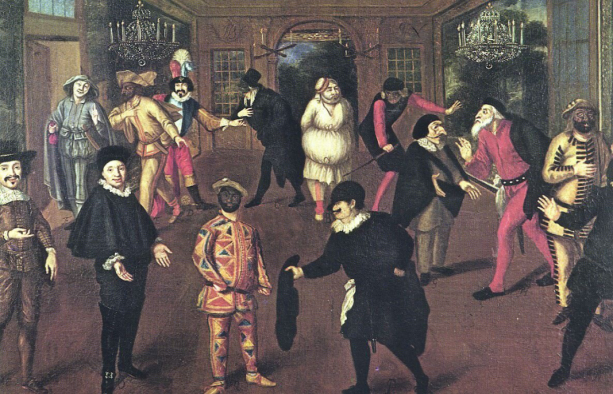
The term farce is derived from the French word for “stuffing”, in reference to improvisations applied by actors to medieval religious dramas. Later forms of this drama were performed as comical interludes during the 15th and 16th centuries. The oldest surviving farce may be Le Garçon et l’aveugle (The Boy and the Blind Man) from after 1266, although the earliest farces that can be dated come from between 1450 and 1550. The best known farce is La Farce de maître Pathelin (The Farce of Master Pathelin) from c.
Examples
Classical antiquity
- Satyr play
- Phlyax play
- Menander‘s Dyskolos (The Grouch)
- Atellan Farce
- Plautus‘ Aulularia (The Pot of Gold)
- Querolus
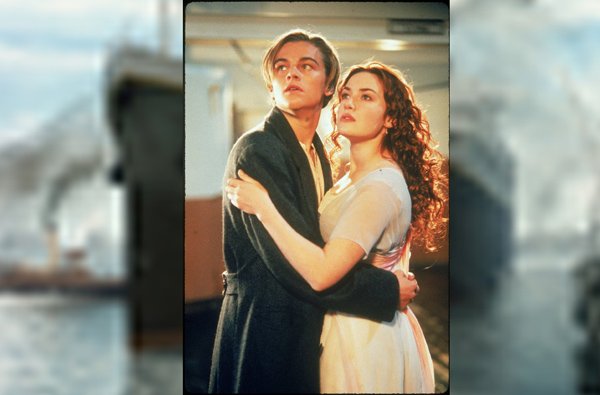
8. MODERN DRAMA: Modern Drama refers to plays written in the 19th and 20th centuries whereas contemporary drama refers to plays written today. Moderndramatists include such playwrights as Tennessee Williams, Oscar Wilde, and Henrik Ibsen. … A DOLL’S HOUSE by Henrik IbsenOne of the best-known modern plays is A Doll’s House.
What are examples of modern drama?
Modern Drama refers to plays written in the 19th and 20th centurieswhereas contemporary drama refers to plays written today. Modern dramatists include such playwrights as Tennessee Williams, Oscar Wilde, and Henrik Ibsen. Here are a few quintessential examples of modern drama:
A DOLL’S HOUSE by Henrik Ibsen
One of the best-known modern plays is A Doll’s House. In a rich, naturalistic style, Ibsen examined the struggle against the unyielding constraints of social conformity, particularly as they are applied to women in their marriages. Nora, the protagonist, ultimately rejects the marriage that would smother her, something that genuinely shocked audiences around the world when the play first premiered in the late 1800s.
A STREETCAR NAMED DESIRE by Tennessee Williams
This much-beloved play tells the story of faded beauty Blanche DuBois and her enticing, if primitive, brother in law Stanley Kowalski. The play took home the Pulitzer Prize for Drama, and is widely regarded to be just as powerful today as it was when it first premiered over half a century ago.
THE IMPORTANCE OF BEING EARNEST by Oscar Wilde
This hilarious restoration comedy tells the story of philanderer Algernon and his friend Jack who is caught up in Algernon’s web of lies — as well as his own — as he proceeds to woo the beautiful Gwendolyn. This is the perfect example of the well-made play, and is constantly revived.

9. MELODRAMA: Melodrama is a subgenre of drama, which is an exaggerated form of this genre. Melodramas deal with sensational and romantic topics that appeal to the emotions of the common audience. … In fact, a melodramagives preference to a detailed characterization where characters are simply drawn, one-dimensional, or stereotyped.

 CREATIVE Writing